Customer Engagement Retail: AI-Driven Personalization & Loyalty
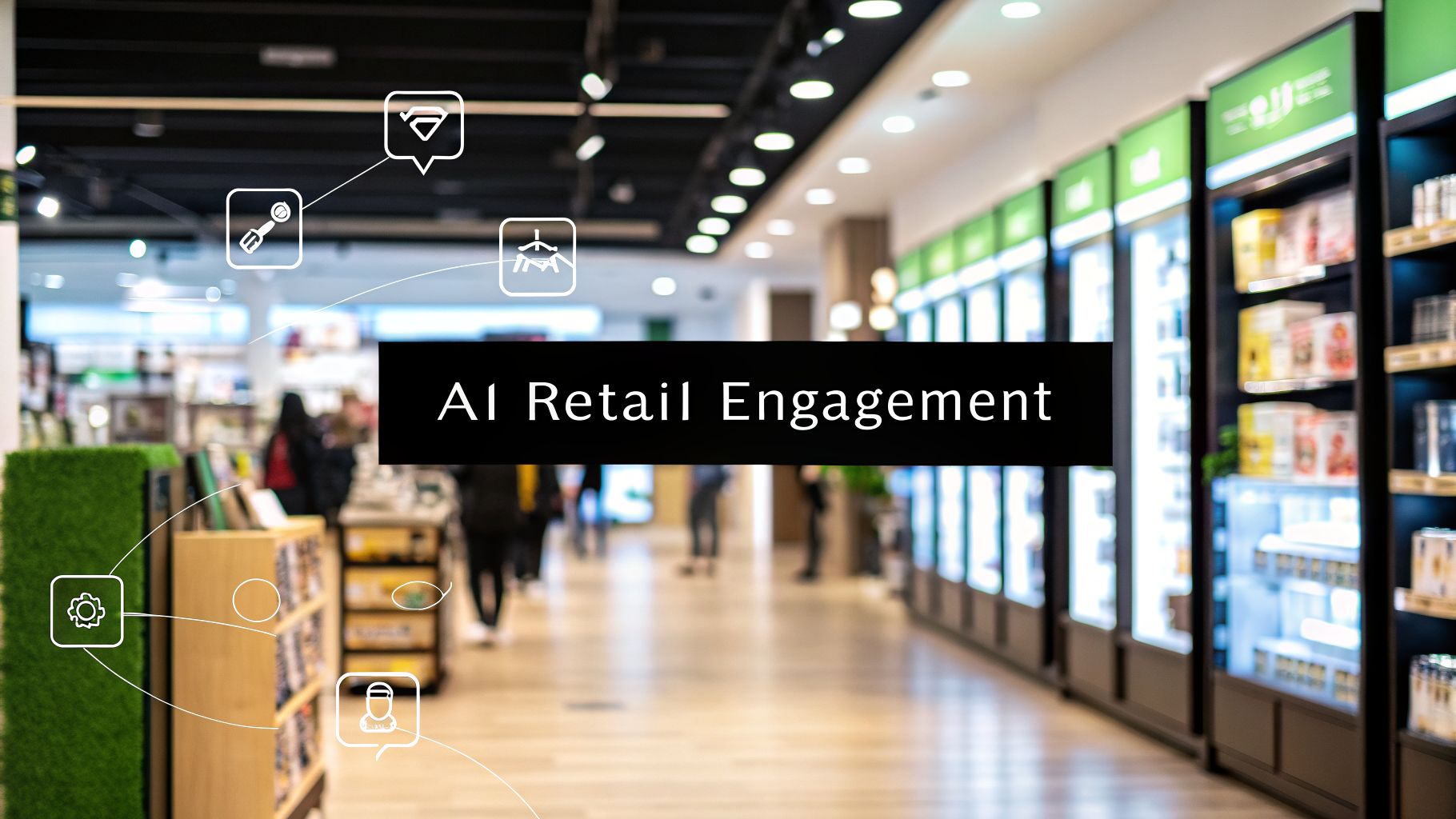
In retail, customer engagement is all about building real, lasting relationships with your shoppers. It means moving beyond just making a sale and focusing instead on creating memorable experiences that turn a first-time buyer into a lifelong fan. Think of it as a conversation that starts the moment they land on your website and continues long after they walk through your store's doors.
Why AI Is Changing the Game for Customer Engagement in Retail

Feeling the pressure to connect with customers on a more personal level? You're not alone. The old playbook of mass marketing and generic discounts just doesn't cut it anymore. Shoppers today expect you to know them, anticipate their needs, and make them feel seen. For a beginner, this might sound like a huge challenge, but this is where Artificial Intelligence (AI) has become an absolute game-changer for retailers.
Let’s be clear: AI isn't about replacing the human touch. It’s about giving your team superpowers. AI sifts through massive amounts of data—browsing history, past purchases, even how customers click around your site—to find patterns. It helps you understand what people really want, often before they do.
From Mass Marketing to Personal Conversations
Think of it this way. You could send out a generic "20% off everything" email blast to your entire list. Some people might bite. Or, you could use AI to automatically notify a specific customer that the coat they viewed last week is now back in stock, in their size and favorite color.
Which one do you think works better? The second one, obviously. It’s a helpful, personal nudge, not a generic shout. This is what AI does best: it helps you shift from broadcasting a single message to everyone to having thousands of individual, one-on-one conversations at scale.
This approach is so effective because it builds genuine trust. We've seen that real-time personalization can boost conversion rates by 15-25%. It simply makes the shopping experience feel smoother and more relevant to the individual.
Expert Opinion: "In a world of endless choice and low switching costs, building deep customer loyalty is your best defense. AI is the engine that drives that loyalty, turning every interaction into a chance to listen, personalize, and add real value." – Sarah Chen, Retail Tech Analyst
This isn't just for the big-box stores, either. Retailers of all sizes can use AI to improve customer engagement retail and make every shopper feel important. To really get a handle on the fundamentals, this guide on Mastering customer engagement retail is a fantastic starting point.
Key Benefits of AI in Retail Engagement
- Get a True 360-Degree Customer View: AI connects the dots between online browsing and in-store purchases, giving you a complete picture of what your shoppers are after.
- Personalize Proactively, Not Reactively: Stop waiting for customers to tell you what they want. AI helps you anticipate their needs and suggest the right product at the perfect time.
- Boost Loyalty and Keep Customers Coming Back: When customers feel understood, they stick around. This directly increases their lifetime value and your bottom line.
- Make Customer Service More Efficient: AI-powered chatbots can handle routine questions 24/7, which frees up your human support team to solve the more complex problems that require a personal touch.
Creating Hyper-Personalized Journeys Customers Adore

For a long time, personalization in retail just meant slotting a customer's first name into an email subject line. Frankly, that’s the bare minimum now. Real personalization is about creating an experience so intuitive it feels like you're reading your customer’s mind. It shows you genuinely get them. This is where AI really shines, helping you look past basic demographics to figure out the why behind every click.
Think about it. A shopper lands on your site, looks at three different hiking boots, and then reads reviews for a waterproof jacket before bouncing. Without AI, that lead goes cold. With it, you can trigger a perfectly timed email a week later—not about a generic sale, but about a new, highly-rated waterproof boot that just came in their size, along with a matching jacket. That’s the new standard for customer engagement retail.
This isn't some niche trend; it’s rapidly becoming how smart brands operate. The 2025 Braze Global Customer Engagement Review found that 39% of marketing leaders are already using AI for advanced customer data analysis, and 38% are digging into consumer behavior with it. The payoff is huge, with businesses using AI to shape their customer journeys seeing a 33% higher customer lifetime value.
Moving Beyond Basic Data with Zero-Party Data
To make these personalized experiences truly powerful, we have to look beyond what customers do and start listening to what they tell us. This is where zero-party data becomes your secret weapon. It’s information that customers willingly give you, and it's pure gold.
We're talking about things like:
- Style quizzes ("What's your dream vacation vibe?")
- Preference centers ("Which categories do you want to hear about?")
- Interactive surveys on your site or app ("Help us pick our next T-shirt design!")
A customer might tell you their favorite colors, their skin type, or that they're shopping for a wedding gift. This data is incredibly accurate because it comes straight from the source. It also builds trust, because they chose to share it.
Imagine a home goods store asking customers their preferred design style—modern, rustic, or minimalist. The next time they visit, the homepage isn't a generic grid of products. It’s a beautifully curated storefront that perfectly reflects their unique taste.
"AI doesn't have to guess what your customers want. The real magic happens when you combine behavioral data (what they browse) with zero-party data (what they tell you). You end up with a recommendation engine that’s almost impossible to beat." – Ben Carter, E-commerce Strategist
Turning Insights into Actionable Experiences
Having all this great customer insight is one thing, but putting it to work automatically is what separates the leaders from the laggards. AI connects the dots, making sure every interaction feels like part of one seamless conversation.
Dynamic Website Content: AI can change website banners, product carousels, and even navigation in real-time. A first-time visitor might see your best-sellers, while a repeat customer is greeted with new arrivals from their favorite brands.
Predictive Recommendations: This is way more than "people who bought this also bought…" Modern AI looks at individual browsing habits to suggest items that either complete a recent purchase or fit with their long-term interests. Think of how Netflix's "Because you watched…" suggestions are often eerily accurate—it's the same principle applied to shopping.
Personalized Offers and Timing: AI can even figure out the perfect moment to send an offer. It might hold off on sending a discount to a customer who always pays full price but nudge a cart-abandoner with a small incentive.
A great practical example comes from the beauty industry. Think of a tool that takes a customer's quiz answers about their skin concerns and instantly builds a recommended skincare routine. This is happening right now; a fantastic AI Beauty Assistant case study shows exactly how it's done.
The algorithms behind these features can get pretty complex. If you’re curious about the nuts and bolts, our guide on machine learning in retail is a great place to start. Ultimately, when you understand your customers this deeply, your marketing starts to feel more like a personal shopping service—and that is the key to creating real loyalty.
Unify the Experience With an Omnichannel AI Strategy

Today’s shoppers don't think in terms of channels. They just see your brand. They might browse for a new pair of shoes on their laptop during a lunch break, add them to a cart on their phone while on the train home, and then decide to try them on in-store the next day. If that experience is disjointed, it feels clumsy and creates friction.
An omnichannel approach is no longer a "nice-to-have" in customer engagement retail; it's essential. The goal is to create one continuous conversation with your customer, no matter how they choose to connect with you. AI is what makes this possible, serving as the connective tissue that ensures consistency and makes the entire journey feel personal and intelligent.
Building a Single Customer View With AI
The cornerstone of any solid omnichannel strategy is a unified customer profile. You need to know who you're talking to. AI is brilliant at this, pulling together data from every single touchpoint—website clicks, app usage, in-store purchases, social media likes, and support chats—into one coherent view of the customer.
Think about what this 360-degree understanding unlocks. When a shopper abandons their cart online, your AI knows immediately. It can then trigger a personalized reminder email or even a push notification with a small incentive to nudge them over the finish line. That kind of timely, relevant interaction just isn't possible when your systems are siloed.
This cross-channel consistency is a massive driver of engagement. We've seen that customers engage 3x more when the experience is consistent across email, SMS, and other channels. Yet, even though top-performing brands are 16% more likely to use three or more channels, a surprising number still lack a single platform to manage it all, as highlighted in recent customer engagement trend reports.
AI-Powered Omnichannel Touchpoints
So, what does this look like in practice? An AI-powered omnichannel strategy creates tangible benefits for shoppers by making their experience genuinely helpful and convenient.
The table below breaks down a few real-world examples of how AI can enhance different retail channels.
| Channel | AI Application Example | Customer Benefit |
|---|---|---|
| Website | AI-driven product recommendations based on both online browsing and in-store purchase history. | Sees highly relevant products they're more likely to love. |
| Mobile App | Geofenced push notifications offering a special discount when a customer is near a physical store. | Receives timely, valuable offers that feel personalized. |
| In-Store | Smart mirrors that suggest complementary items to what a customer is trying on. | Gets instant styling advice and discovers new products. |
| Customer Support | An AI chatbot that accesses a unified profile to understand the customer's full context and order history. | Avoids repeating information and gets faster, more accurate resolutions. |
These are just a few examples, but they show how AI connects the dots, turning separate interactions into a single, cohesive brand experience that builds loyalty.
Practical Examples of AI in Omnichannel Retail
Let's break down how this works in more detail.
In-Store and Online Inventory Sync: A customer finds a dress they love online but wants to try it on. An AI-powered inventory system can instantly tell them if it’s in stock at their local store, guide them to its exact location in the aisle, and even let them reserve it for pickup. No more wasted trips.
Contextual Customer Support: Picture a customer messaging your support team. Instead of asking "What's your order number?", your AI chatbot instantly pulls their entire history—past purchases, recent browsing, and existing support tickets. This means the customer gets relevant help right away, which you can learn more about in our guide on AI customer service chatbots.
Consistent Personalization Everywhere: The recommendations a customer sees on your website should absolutely align with what they see in your app. If they "liked" a product on Instagram, your AI should be smart enough to feature it on your homepage the next time they visit. It’s all one conversation.
Expert Opinion: "The real magic of omnichannel AI is making your brand feel like a helpful friend who remembers your last conversation, no matter where it happened. It removes the friction and makes the customer feel seen and valued at every turn." – Maria Fernandez, Customer Experience Consultant
Seamless Transitions Between Digital and Physical Worlds
The ultimate goal is to blur the line between online and offline shopping until it disappears. AI is the bridge. For instance, smart cameras in your physical stores can analyze foot traffic and dwell times in certain areas, giving you insights that mirror the heatmaps you'd see on your website.
This data allows you to optimize store layouts, stock inventory more intelligently, and even personalize in-store offers. A customer who often buys running gear online might get a push notification with a special on new running shoes right when they walk into your store. It’s this level of smart, cohesive interaction that transforms a series of fragmented moments into a truly unified brand experience—and builds the kind of loyalty that lasts.
Building Emotional Connections and Lasting Loyalty
Let's be honest—a good price might win you a sale today, but it won't win you a customer for life. That kind of loyalty, the kind that turns a first-time buyer into a genuine brand fan, is built on something more solid: an emotional connection. This is where AI moves beyond simple efficiency and gives you the tools to forge those bonds at scale.
This isn't just about another points program. While points have their place, AI lets you create those "wow" moments that people remember. It's about making your customers feel seen as individuals, not just another order number in your system.
Understand How Customers Really Feel with Sentiment Analysis
One of the best ways to build a connection is to actually listen. Think of sentiment analysis as your digital ear to the ground. This AI-powered technology sifts through customer reviews, social media chatter, and support chats to understand the emotion behind the text. Is someone thrilled? Frustrated? Utterly confused?
Imagine your AI flagging a string of frustrated tweets about a product's new packaging. Instead of letting that negativity fester online, your team gets an alert. You can jump in, offer a solution, and show you're paying attention. You just turned a potential PR headache into a moment that builds incredible goodwill.
This is where you can start responding with real empathy. An AI can detect the rising frustration in a customer's support chat and instantly escalate the ticket to a senior agent. That customer gets the white-glove treatment they need, and you prevent a small issue from becoming a major complaint. It’s a simple shift that makes a huge impact on your customer engagement retail strategy.
"When you actively listen and respond with empathy, you're not just solving a problem—you're showing the customer they matter. That feeling is the foundation of true, lasting loyalty." – Dr. Evelyn Reed, Consumer Psychologist
And the numbers back this up. It costs 5X less to keep a customer than to find a new one. More than that, brands that build this trust often see 4X the growth of their competitors. Why? Because loyal customers are a staggering 88% more likely to buy from you again. For the brands that really lean into building these emotional connections, 60% of them blow past their revenue goals. If you want to go deeper, you can explore how personalization is reshaping retail predictions.
Create Loyalty Programs That Feel Personal
Using AI, your loyalty programs can finally break free from the one-size-fits-all model. Forget the generic "spend $100, get $5 off" offers. You can now build dynamic rewards that feel like they were made just for that specific person.
Think about what's possible when AI is driving the experience:
- Surprise and Delight: Your system flags that a customer made their first purchase exactly one year ago today. It automatically shoots them a "Happy Brandiversary!" email with a surprise 25% discount. It's unexpected, it's personal, and it makes them feel valued.
- Personalized Challenges: For a fitness apparel shop, the AI notices a customer who buys running gear every few months. It sends them a personal challenge: "Log 5 runs with your favorite app this month and unlock early access to our new shoe collection." You're speaking their language and making engagement fun.
- Rewards Beyond the Wallet: AI can track more than just spending. It can reward customers for leaving reviews, sharing on social media, or referring friends. This encourages them to become part of your brand community, not just passive shoppers.
Use Gamification to Make Loyalty Fun
People are wired to love games. Gamification simply borrows elements from games—points, badges, leaderboards, and fun challenges—and applies them to things like your loyalty program. It makes interacting with your brand a habit, keeping customers hooked long after the initial purchase.
Sephora's Beauty Insider program is a masterclass in this. It’s not just about points; it’s about climbing tiers (Insider, VIB, Rouge) that unlock exclusive perks and experiences. Their AI digs into purchase history to offer members relevant samples and personalized tips, making the whole thing feel less like a program and more like a VIP club.
Starbucks Rewards is another brilliant example. The app uses AI to generate personalized offers and "Double Star Days" based on your go-to drink order. This actively encourages more frequent visits and turns a simple coffee run into an engaging little game. These brands get it: the goal is to turn buyers into believers who are genuinely excited to be part of your world.
Your Practical Roadmap to AI Implementation
Alright, so you're convinced AI can make a real difference in your customer engagement, but the big question is… where do you actually begin? The idea of a massive, complex tech project is enough to give anyone pause, especially if you're just starting out.
But here’s the secret: you don't have to do everything at once. The smartest way to approach AI is with a simple "Crawl, Walk, Run" mindset. This framework is all about building momentum, learning as you go, and delivering real results at every stage. It’s a marathon, not a sprint.
The Crawl Phase: Starting With Quick Wins
The "Crawl" phase is all about grabbing the low-hanging fruit. Your goal here is to find a simple, high-impact AI tool that solves a clear-cut problem and gives you a quick, measurable return. This is how you build confidence and get your team comfortable with the new technology.
A perfect place to start is with a basic AI-powered customer service chatbot.
Think about all the repetitive questions your support team gets swamped with every single day: "Where is my order?" or "What's your return policy?" A chatbot can handle these queries instantly, 24/7. This frees up your human agents to focus on the more complex, high-touch issues where their expertise really shines.
Here’s a practical example:
An online clothing boutique adds a simple chatbot to its website. In the first month, it automatically handles 30% of all customer inquiries. This slashes wait times, keeps shoppers happy, and gives the two-person support team more time to act as personal stylists, helping customers with sizing and fit.
My Two Cents: Your first AI project needs to be a visible win. Don't get bogged down in a massive, multi-year data science initiative. Pick something that makes your customers' lives easier or your employees' jobs simpler within the next 90 days. Momentum is everything.
The Walk Phase: Adding Smarter Capabilities
Once you have a win under your belt and your team is on board, you're ready for the "Walk" phase. This is where you start connecting different data sources to create more sophisticated and personalized experiences. Now you can really ramp up your customer engagement retail efforts.
A fantastic project for this stage is adding predictive product recommendations to your e-commerce site. I'm not talking about the basic tools that just show "most popular" items. A true AI recommendation engine looks at an individual's browsing history, past purchases, and even what they’ve left in their cart to suggest products they will genuinely want.
This is also the perfect time to get serious about cleaning up and organizing your customer data. Any successful AI needs good, clean data to learn from. Our guide on building a solid AI implementation roadmap can walk you through the nitty-gritty of getting your data house in order.
The Run Phase: Orchestrating the Full Journey
The "Run" phase is the end goal. At this stage, you're conducting a fully unified, AI-driven customer journey that spans all your channels—online and offline. The AI is no longer just a standalone tool; it's the central brain of your engagement strategy, making sure every interaction is seamless, contextual, and deeply personal.
This is where you combine data from your website, mobile app, and even your physical stores. For instance, AI-powered smart cameras can analyze in-store foot traffic and dwell times, giving you the same kind of insights you get from website heatmaps.
This is how you turn data into action, and action into advocacy.

By using data intelligently to inform your actions, you build the kind of connection that turns casual shoppers into loyal fans who rave about your brand.
Choosing Your Tools
You don't need a team of data scientists to get started. The market is full of great options, many designed for beginners.
- SaaS Platforms: For most businesses in the Crawl and Walk phases, user-friendly SaaS (Software as a Service) platforms are the way to go. They’re built for quick setup and require minimal technical skill.
- Customizable Solutions: As you move into the Run phase, you might look at more powerful platforms or even build some components yourself to perfectly match your unique business needs.
No matter where you start, the key is to set achievable goals and focus on making steady progress. By breaking your AI journey into these three phases, you can build a more intelligent, responsive, and engaging retail business one step at a time.
Answering Your Top Questions About AI in Retail
Jumping into AI always brings up some tough questions. It’s a huge shift, so it's natural to have concerns about how it all works in the real world. Let's tackle some of the most common questions I hear from retailers, clearing the air so you can move forward with confidence.
Isn't AI Too Expensive and Complicated for a Small Shop?
This is, without a doubt, the number one hurdle I see people worry about. And honestly, a few years back, they would have been right. But the game has completely changed. The explosion of accessible Software as a Service (SaaS) tools means you no longer need a team of data scientists to get started.
Powerful AI is now available on a subscription basis, and you can start small with tools that deliver immediate value. For instance:
- You can get an AI-powered chatbot running on your site for a modest monthly fee, handling common questions and freeing up your team instantly.
- Many email marketing platforms now include AI features for optimizing send times and segmenting customers, often for only a small price increase over their basic plans.
Think of it this way: you don't need to build the entire engine just to drive the car. You can simply subscribe to a service that gives you the specific horsepower you need. Many of these tools are built specifically for business owners, not tech wizards, and focus on getting you quick, tangible wins.
Will AI Steal Jobs from My Team?
This is a big one, but it’s more of a movie-plot fear than a retail reality. The true purpose of AI in a retail setting isn't to replace your people—it's to make them better at their jobs. AI is brilliant at handling the repetitive, data-crunching tasks that humans find draining.
When AI takes over the monotonous work, your employees are free to focus on what they do best: building genuine customer relationships, creatively solving problems, and providing that irreplaceable human touch.
An AI can sift through thousands of transactions to suggest a product bundle, sure. But it takes one of your savvy team members to create a beautiful in-store display for that bundle or talk to a customer about why those products work so well together. AI gives you the "what"; your team provides the "how" and the "wow."
My Take: The smartest AI strategies I've seen don't cut humans out of the picture—they empower them. AI does the heavy lifting with data so your staff can focus on creating memorable, high-value experiences for your customers. It’s about making your team stronger, not smaller.
Do I Need Perfect, Spotless Data to Even Start?
This is another myth that holds too many businesses back. The idea that you need perfectly pristine data before you can even think about AI is just not true. While better data will always give you better results, most modern AI tools are designed to work with the data you already have, imperfections and all.
The trick is to start with one clear goal in mind. If you want to improve product recommendations, focus your initial efforts on cleaning up your sales and website browsing history. You can improve your data quality piece by piece as you start seeing the benefits and decide to take on more. Every big journey starts with a single step, and in this case, it can start with a single, reasonably clean dataset.
Ready to see what AI can do for your business? At YourAI2Day, we provide the latest news, tools, and insights to help you make smart decisions. Explore our resources and start your AI journey today.