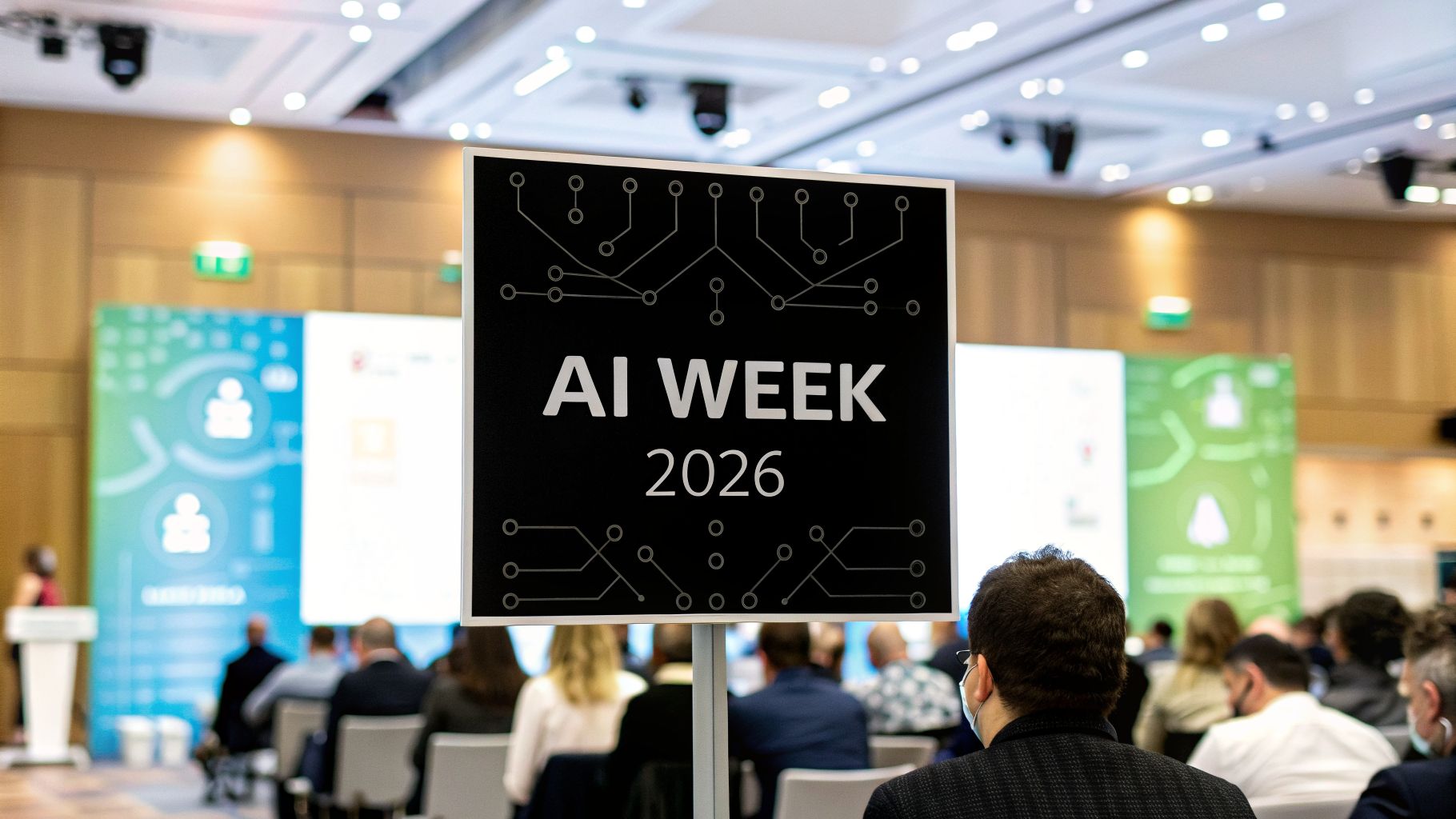
Artificial Intelligence Week: Your Guide to the Top Global Events for 2026
Hey there! The world of AI is moving at lightning speed, and trying to keep up can feel like a full-time job. That's where dedicated events come in, with the "AI Week" format becoming super popular. Think of them as city-wide festivals packed with talks, hands-on workshops, and amazing networking opportunities for everyone from curious beginners to seasoned pros. But with so many popping up, how do you pick the right one? Whether you're a startup founder looking for funding, a developer on the hunt for new techniques, or a business pro trying to figure out how to use AI responsibly, there’s an artificial intelligence week built just for you.
This roundup breaks down the top AI week events scheduled for 2026, giving you the practical details you need to decide where to spend your time and money. We’ll explore what makes each one unique, from Boston's deep-tech focus to Amsterdam's global stage. Knowing how much effort goes into these things can also help you spot a quality event; understanding how to organize a conference from concept to closeout gives you a great behind-the-scenes perspective. Let's find your perfect match!
1. AI Week (AIScoop)
AI Week, put on by AIScoop, is a really cool event that thinks about artificial intelligence as a nationwide festival, not just a stuffy conference in one building. Scheduled for April 20–24, 2026, it brings together leaders from government, education, and tech for a whole series of over 100 community-run events. This setup makes it a fantastic hub if you're interested in how AI is being used in the public sector and how we can all implement it responsibly.

Think of it less as a direct service and more as your gateway to a huge ecosystem of events. It’s perfect for public-sector executives, policy makers, educators, and companies trying to connect with government agencies. Instead of one giant, expensive ticket, you can find and join local or virtual events that match what you care about. For example, you might find a city-hall discussion on AI ethics or a university-led workshop on machine learning.
Audience and Actionable Insights
- For Business Leaders & Vendors: The site makes it easy to get involved through sponsorships or by "hosting your own event." This is a powerful way to get in front of a targeted government and education audience. A practical first step? Check out their sponsorship info and think about submitting a proposal to host an event. It’s a great way to position your company as a leader in public-sector AI.
- For Public-Sector & Education Professionals: Use this platform to discover what’s out there. Once the calendar fills up, it will be your best friend for finding relevant local meetups, virtual talks on policy, and networking opportunities. It’s a super-efficient way to connect with peers and learn from what others are doing, without having to fly across the country.
- For AI Enthusiasts & Beginners: Even though it has a professional focus, the community-run model means there are often really accessible, introductory events. If you're new to AI, keep an eye on the event list for local workshops or webinars that break down tricky topics. Some of the best conversations happen at these smaller gatherings, making them perfect for anyone just wanting to learn.
Expert Opinion: "The distributed festival model is a game-changer. It lowers the barrier to entry for smaller organizations and municipalities, fostering a much richer, more diverse conversation about AI's role in society than a single mega-conference ever could." – Dr. Alistair Finch, Public Policy Analyst.
Pros and Cons
| Pros | Cons |
|---|---|
| Unique national festival format with strong government and education reach. | Detailed session information and specific event locations are fluid until closer to the date. |
| Central calendar simplifies discovering niche and regional AI events. | Pricing for participation or sponsorship is not immediately clear from the main site. |
| Opportunities for organizations to host their own affiliated events. | Primarily focused on the U.S., limiting its scope for international participants. |
Website: https://www.aiweek.com
2. AI Week (AIScoop)
AI Week, organized by AIScoop, is a standout event that frames the conversation around artificial intelligence as a nationwide festival rather than a single-location conference. Scheduled for April 20–24, 2026, it convenes leaders from the public sector, education, and technology for a distributed series of over 100 community-run events. This structure makes it a central hub for anyone looking to engage with AI on a national scale, especially those focused on government applications and responsible implementation.
The platform is less a direct service and more a gateway to a broad ecosystem of events. Its primary audience includes public-sector executives, policy leaders, educators, and vendors aiming to connect with government agencies. Instead of one massive, expensive ticket, attendees can find and join local or virtual events that fit their specific interests, from city-hall discussions on AI ethics to university-led workshops on machine learning.
Audience and Actionable Insights
- For Business Leaders & Vendors: The site offers clear pathways for sponsorship and opportunities to "host your own event." This is a powerful way to gain visibility with a targeted government and education audience. A practical first step is to explore the sponsorship prospectus and consider submitting an event proposal to position your company as a thought leader in the public-sector AI space.
- For Public-Sector & Education Professionals: Use the platform as a discovery tool. The calendar, once populated, will be your best resource for finding relevant local meetups, virtual talks on policy, and networking opportunities. It’s an efficient way to connect with peers and learn from case studies outside of typical conference circuits.
- For AI Enthusiasts & Beginners: While the focus is professional, the community-driven model often produces accessible, introductory events. If you're new to the field, keep an eye on the event list for local workshops or webinars that break down complex topics. Many a great discussion happens at these smaller gatherings, which are perfect for anyone wanting to keep up with the latest developments. To stay informed year-round, consider subscribing to an artificial intelligence weekly newsletter for curated updates.
Expert Opinion: "The distributed festival model is a game-changer. It lowers the barrier to entry for smaller organizations and municipalities, fostering a much richer, more diverse conversation about AI's role in society than a single mega-conference ever could." – Dr. Alistair Finch, Public Policy Analyst.
Pros and Cons
| Pros | Cons |
|---|---|
| Unique national festival format with strong government and education reach. | Detailed session information and specific event locations are fluid until closer to the date. |
| Central calendar simplifies discovering niche and regional AI events. | Pricing for participation or sponsorship is not immediately clear from the main site. |
| Opportunities for organizations to host their own affiliated events. | Primarily focused on the U.S., limiting its scope for international participants. |
Website: https://www.aiweek.com
3. Boston AI Week
Boston AI Week turns the entire city into a massive campus for artificial intelligence, framing itself as a festival with deep roots in science and industry. Happening from September 24 – October 2, 2026, it brings together the area's powerhouse ecosystem of startups, big companies, universities, and investors. With over 300 events planned, it’s all about practical AI in fields like healthcare, robotics, and biotech. If you want to see how AI is actually solving real-world problems, this is the place to be.

What makes this event special is how connected it is to Boston's amazing research labs and industry giants. Instead of being stuck in one convention center, you get to explore the city, maybe attending a workshop at an MIT lab, a panel at a biotech incubator, or a networking event at a VC firm. It's a great mix of free, public-friendly sessions and more specialized, industry-specific tracks, so it’s great for everyone from students to executives.
Audience and Actionable Insights
- For Business Leaders & Investors: This is prime territory for scouting talent and new ideas. A practical tip: use the event schedule to find startups in your area of interest (like robotics or healthcare) and make a point to attend their demos or pitches. You can filter the event list by industry track to map out the key sessions where you can connect with founders and researchers.
- For Tech Professionals & Researchers: This is your chance to really connect with the local academic and business AI scene. Look for deep-dive technical workshops hosted by universities or talks from engineers at major tech companies. Many events give you direct access to the people working on cutting-edge research, which is awesome for collaboration and learning.
- For AI Enthusiasts & Beginners: With so many public-friendly events, this is a perfect entry point. Keep an eye out for free museum exhibits, public lectures, or intro seminars. If you're just starting out, these sessions are a fantastic way to get a handle on the basics. To get a head start before you go, you can learn more about what is artificial intelligence and its core ideas.
Expert Opinion: "Boston's concentration of talent in biotech, robotics, and academia is its superpower. An event like this doesn't just talk about AI; it shows you AI in action, from the lab to the clinic. It's where theory meets application." – Dr. Evelyn Reed, Bio-AI Researcher.
Pros and Cons
| Pros | Cons |
|---|---|
| Broad, inclusive programming friendly to newcomers and practitioners. | Citywide format can make logistics and travel between venues more complex. |
| High density of cutting-edge sectors and research institutions. | Premium pass details vary by event and host, leading to some variability in access and pricing. |
| Strong focus on applied AI in high-growth industries like biotech. | Overwhelming number of events can make it difficult to plan a schedule without careful filtering. |
Website: https://aiweek.boston
4. Chicago AI Week
Chicago AI Week has carved out a name for itself as a top-tier annual gathering all about the practical side of responsible AI. Scheduled for June 16–17, 2026, this event brings leaders from business, government, and academia to Chicago. It has a tight focus on regulated industries like finance and healthcare, along with responsible AI and investing, making it a super important event for professionals dealing with complex compliance and ethical questions.

The event's website is your central hub for everything, managed through Luma for tickets and registration. Unlike broader tech festivals, Chicago AI Week’s real strength is its carefully curated program that tackles the real-world challenges companies face. You'll find a mix of main-stage talks and plenty of time for high-impact networking. It's the ideal event if you want to move beyond just talking about AI and actually start implementing it.
Audience and Actionable Insights
- For Business Leaders & Regulated Industries: The program tracks on finance and healthcare are gold. A practical tip: check out the speaker lineup and session descriptions on the website to find practitioner-led talks that speak to your specific compliance or operational challenges. For example, you might find a session on using AI for fraud detection that meets industry regulations.
- For Public-Sector & Nonprofit Professionals: This is one of the few big industry events that offers special, accessible ticket prices for government and nonprofit folks. You should definitely take advantage of this to connect with private-sector experts and learn about public-private partnerships in AI. The focus on responsible AI gives you a direct line to best practices you can bring back to your own organization.
- For Students & AI Enthusiasts: The student pass makes this high-level artificial intelligence week affordable. It’s a fantastic opportunity to learn from industry veterans and make connections that could launch your career. Before you go, use the site to research the companies that will be there and come prepared with smart questions for the networking sessions.
Expert Opinion: "Events like Chicago AI Week are vital. They move the conversation from 'what if' to 'how to,' especially in sectors like banking and medicine where trust and accountability are non-negotiable. The practitioner focus is what sets it apart." – Maria Flores, FinTech Strategy Consultant.
Pros and Cons
| Pros | Cons |
|---|---|
| Practitioner-led content tailored for enterprises in regulated sectors. | Ticket prices are not shown upfront on the public registration page. |
| Strong focus on responsible and ethical AI implementation. | Approval-based registration may slow down the sign-up process for some attendees. |
| Tiered ticketing includes accessible options for public-sector and students. | The event is geographically focused on Chicago, which may be a barrier for a global audience. |
Website: https://chicagoaiweek.com
5. Great Lakes AI Week
Great Lakes AI Week has a specific and super valuable niche: it’s all about practical AI for the Midwest's core industries. Happening from November 3–5, 2026, this event cuts through the hype. It brings together people who are actually implementing AI—business leaders and tech experts—to share real-world case studies in manufacturing, supply chain, marketing, and other key areas for the regional economy.

The whole event is designed for action. It’s aimed at enterprise decision-makers, operations managers, and regional companies looking for real AI solutions. The website clearly lays out its agenda tracks, like "AI for Business" and a "Leadership Summit," letting you build a schedule that works for you. Ticketing is straightforward, with different levels like a "VIP All-Access" pass right there on the site, so there's no guesswork.
Audience and Actionable Insights
- For Business Leaders & Vendors: This is your chance to connect with a focused, regional audience that cares about adoption, not just theory. A good first step is to check out the agenda tracks to see where your company's solutions fit in. Sponsoring the event gives you direct visibility to Midwest organizations that are actively looking for AI partners.
- For Operations & Technical Professionals: Use the site to find specific case studies relevant to your industry. For example, a supply chain manager can look for talks on predictive logistics or a marketing manager can find a session on using AI for customer segmentation. Because it's a smaller, regional event, it's much easier to actually talk to the speakers and other attendees who are dealing with the same challenges you are.
- For AI Enthusiasts & Beginners: While the content is geared toward businesses, its practical nature makes it a great place to learn. The case studies show you exactly how AI goes from being an idea to a working solution. If you're in the region, attending this artificial intelligence week is a smart way to understand the local AI job market and connect with major employers.
Expert Opinion: "Regional conferences like this are where the real work of AI adoption gets done. The conversations are grounded in operational realities, helping businesses in the industrial heartland make smart, incremental investments that deliver actual value." – Elena Torres, Manufacturing Tech Consultant.
Pros and Cons
| Pros | Cons |
|---|---|
| Sharp focus on real-world AI adoption and regional vendor connections. | Smaller scale than coastal festivals, and the speaker roster can be regionally focused. |
| Accessible venue logistics and a concentrated footprint for community-building. | Some content and schedule details for future editions are still in development. |
| Clear, upfront ticketing and pragmatic, deployment-first programming. | The niche industrial focus may not appeal to those interested in general AI research. |
Website: https://www.greatlakesaiweek.com
6. AI Week New York (Pulse NYC)
AI Week New York, run by Pulse NYC, takes that distributed festival model and drops it right into the high-energy tech world of New York City. Scheduled for May 11–17, 2026, this event is a citywide celebration of artificial intelligence, with over 100 community-run events and an expected 15,000+ attendees. It organizes the action into cool tracks like Creative Tech, Enterprise Scale, Ethical AI, and Investor Match, making it a go-to destination for founders, engineers, and investors.
The platform is your central hub for finding and joining a ton of different events scattered across the city. It's mainly for the startup and venture capital community, but enterprise execs and policymakers will find a lot here too. Instead of one conference hall, the whole city is the venue. You could find yourself in a VC-founder speed-dating session, a technical workshop on large language models, or even a gallery showcase of AI-generated art.
Audience and Actionable Insights
- For Founders & Investors: The "Investor Match" track is where you want to be. The website is your ticket to finding and signing up for high-stakes networking events. A smart move is to get on their mailing list now so you're the first to know when the event schedule and applications for pitch sessions go live. This is a huge opportunity for making deals.
- For Engineers & Developers: The topic tracks are your best friend. Look for events under "Enterprise Scale" or other technical themes to find hands-on workshops and deep-dive discussions. Because so many events are community-hosted, you can find niche sessions on specific frameworks or AI challenges that bigger conferences might ignore. For instance, you could find a small meetup dedicated entirely to optimizing a specific AI model.
- For Beginners & Creatives: The "Creative Tech" and "Ethical AI" tracks are great places to start. These often have more accessible talks, panels, and showcases that are perfect for understanding AI's bigger impact. Attending a gallery opening or a panel on AI ethics can be a fun, non-technical way to dive into the world of artificial intelligence week festivities.
Expert Opinion: "The magic of AI Week New York is its density. By concentrating hundreds of events in a city like NYC, it creates an unmatched environment for spontaneous collaboration and high-value connections. You might attend a panel on enterprise AI and end up meeting your next co-founder or lead investor at a coffee shop afterward." – Maria Flores, Venture Capitalist.
Pros and Cons
| Pros | Cons |
|---|---|
| NYC's density creates exceptional networking and deal-flow opportunities. | The detailed schedule and pricing were not yet published at the time of this review. |
| Broad programming supports both technical builders and business leaders. | Requires significant planning flexibility as key details are often released closer to the event date. |
| Strong emphasis on the startup and investor community. | Can be overwhelming for first-time attendees without a clear plan of which events to target. |
Website: https://pulse.nyc/ai-week/
7. World AI Week (Amsterdam)
World AI Week in Amsterdam, put on by the creators of the World Summit AI, takes the event concept to a truly global level. Scheduled for October 5–9, 2026, this city-wide festival is an umbrella for over 50 different events, all leading up to the main World Summit AI conference on October 7–8. This setup makes it a top destination for teams wanting an international perspective on artificial intelligence and a hub for making cross-border partnerships.

The platform is your curated gateway to a full week of AI immersion, connecting you with specialized workshops, roundtables, and networking events all over Amsterdam. The audience is very international, attracting C-suite executives, scientific researchers, and startup founders from all corners of the globe. Instead of being stuck on one conference track, you can build a custom itinerary that fits your goals, whether that’s a deep dive into enterprise AI or sessions on the latest AI breakthroughs.
Audience and Actionable Insights
- For Business Leaders & Vendors: The website is your launchpad for global expansion. The "host your own event" program is a direct way to plug your brand into the official schedule, getting you immediate visibility with international decision-makers. A practical first step is to check out the partnership options and align your event proposal with the week's themes to attract the right crowd.
- For AI Researchers & Academics: Use the platform to find niche scientific symposiums and connect with your international peers. The mix of business and science creates unique opportunities for collaboration and funding. Keep an eye on the event calendar for calls for papers or specialized tracks in your field.
- For AI Enthusiasts & Beginners: While a lot of the events are high-level, the sheer number of them means there are often accessible talks and showcases. It’s an amazing opportunity to get a deep dive into how AI is being used around the world. Beyond just attending, deepening your understanding of practical AI applications, like how to use AI for SEO, can be a huge benefit on your journey.
Expert Opinion: "Amsterdam during World AI Week becomes a microcosm of the global AI landscape. It's one of the few places where a startup from Korea can sit down with a venture capitalist from Brazil and a researcher from Germany, all in one afternoon. The density of international talent is unmatched." – Dr. Elena Voronova, Global Technology Strategist.
Pros and Cons
| Pros | Cons |
|---|---|
| High concentration of international decision-makers and partners. | Outside the U.S.; involves travel and time-zone costs for American teams. |
| Efficient platform for cross-border collaboration and benchmarking. | Registration specifics and detailed pass pricing are often posted closer to the dates. |
| Central program integrates 50+ diverse business and science events. | Can be overwhelming to navigate without a clear plan due to the sheer number of events. |
Website: https://worldaiweek.ai
Comparison of 7 Major AI Weeks
| Item | 🔄 Implementation complexity | ⚡ Resource requirements | 📊 Expected outcomes | 💡 Ideal use cases | ⭐ Key advantages |
|---|---|---|---|---|---|
| YourAI2Day | Low — web-based curation and community management | Low — editorial team and hosting | Practical, actionable guidance; tool reviews (not deep research) | Monitor AI news, learn tool how‑tos, community Q&A | Practical, application-first content; broad audience fit |
| AI Week (AIScoop) | Medium — coordinated week of distributed (virtual + in‑person) events | High — event hosts, sponsors, national logistics | Policy engagement and public‑sector adoption visibility | Government outreach, education policy discussions, vendor/government sales | Nationwide festival with strong government/education reach |
| Boston AI Week | High — citywide schedule with hundreds of events | High — venue coordination, university & industry partners | Sector collaborations and research‑industry connections | Applied AI in healthcare, robotics, biotech, climate; regional networking | Dense ecosystem; strong participation from research institutions |
| Chicago AI Week | Medium — main conference with focused program tracks | Medium‑High — ticketing, partner coordination, curated tracks | Practitioner insights for regulated industries; networking opportunities | Enterprises in finance/healthcare, Responsible AI, investors | Practitioner‑led content targeting regulated sectors; multiple pass types |
| Great Lakes AI Week | Low‑Medium — concentrated regional agenda | Medium — local sponsors, focused logistics | Practical deployment case studies and vendor connections | Midwest enterprises seeking implementation guidance | Deployment‑first, pragmatic programming with accessible logistics |
| AI Week New York (Pulse NYC) | High — distributed NYC program across many venues | High — large partner network, investor engagement, media partners | High networking and deal‑flow potential; broad community activation | Founders, engineers, investors, policymakers in NYC tech ecosystem | High networking density and startup–investor match opportunities |
| World AI Week (Amsterdam) | High — international umbrella of 50+ affiliated events | High — international travel, cross‑border coordination | Global partnerships, cross‑border benchmarking and exposure | Teams seeking international perspective, partnerships, R&D collaboration | Concentration of international decision‑makers; linked to World Summit AI |
Making Your Choice and Staying Connected
The world of artificial intelligence can feel like a whirlwind, with new tools and events popping up all the time. This roundup of "artificial intelligence week" events shows just how diverse the scene has become. From the brainy vibe of Boston to the industrial focus of the Great Lakes and the global stage of Amsterdam, each event offers a unique way to see the future of AI. The key is to look past the buzz and find the opportunities that actually match your goals.
Matching the Event to Your Ambition
Choosing the right "artificial intelligence week" isn't about finding the biggest or most famous one; it's about finding the one that speaks your language. Before you buy a ticket, take a minute to think about what a successful trip would look like for you.
- For the Entrepreneur: If you're looking for venture capital or want to plug into a vibrant startup scene, events like AI Week New York (Pulse NYC) or Boston AI Week are loaded with investors and innovators. Your goal is to network, so prioritize sessions on funding, pitch competitions, and startup showcases.
- For the Industry Professional: Are you trying to solve a specific manufacturing or logistics problem? The Great Lakes AI Week offers practical, industry-specific case studies. Here, you should focus on talks about real-world applications and connect with people who've already solved the problems you're facing.
- For the Global Thinker: If your business is international or you're interested in global policy, World AI Week in Amsterdam is your spot. It gives you a broad perspective on how AI is shaping societies and economies all over the world.
Think of these events as concentrated learning opportunities. As AI consultant Maria Rodriguez notes, "The real value of an AI conference isn't just the keynotes; it's the side conversations, the Q&A sessions, and the demos on the expo floor. That's where you find the actionable ideas you can take back to your team on Monday."
Actionable Steps for Continuous Learning
Attending an "artificial intelligence week" is an awesome way to immerse yourself, but the learning shouldn't stop when you fly home. The most successful people in this field are the ones who commit to learning every day. And you don’t need to be a data scientist to stay in the loop.
Platforms like YourAI2Day and newsletters from groups like AI Week (AIScoop) are designed to make it easy. They break down complex topics into simple, digestible insights, making them perfect for staying current without feeling overwhelmed. Your journey in AI is a marathon, not a sprint. By picking the right resources and events for your needs, you can go from being a spectator to an active participant, ready to use these powerful tools in a meaningful way.
The world of AI moves fast, and you don't have to attend every "artificial intelligence week" to keep up. Let YourAI2Day be your daily briefing, delivering the most important news, tools, and insights directly to you. Stay informed and ahead of the curve by visiting YourAI2Day and making it your go-to resource.