How to Specify Work So AI Can Reliably Help You at Work
A Foundational Guide to AI Workflow Automation: Turning AI from a Toy into a Teammate
AI workflow automation is transforming how professionals work. Most people struggle to use AI effectively at work not because the technology is immature, but because the work itself is rarely specified clearly enough to delegate.
This guide explains the single most important skill for using AI well at work: work specification. It introduces a durable mental model, a simple framework you can reuse across roles and tools, and a way of thinking that makes AI outputs more predictable, trustworthy, and useful.
If you only read one piece on using AI at work, start here.
- AI failures at work are usually specification failures, not model failures
- Treating AI like a junior collaborator dramatically improves outcomes
- Clear work specification matters more than advanced prompts or tools
- This skill transfers across roles, industries, and future AI systems
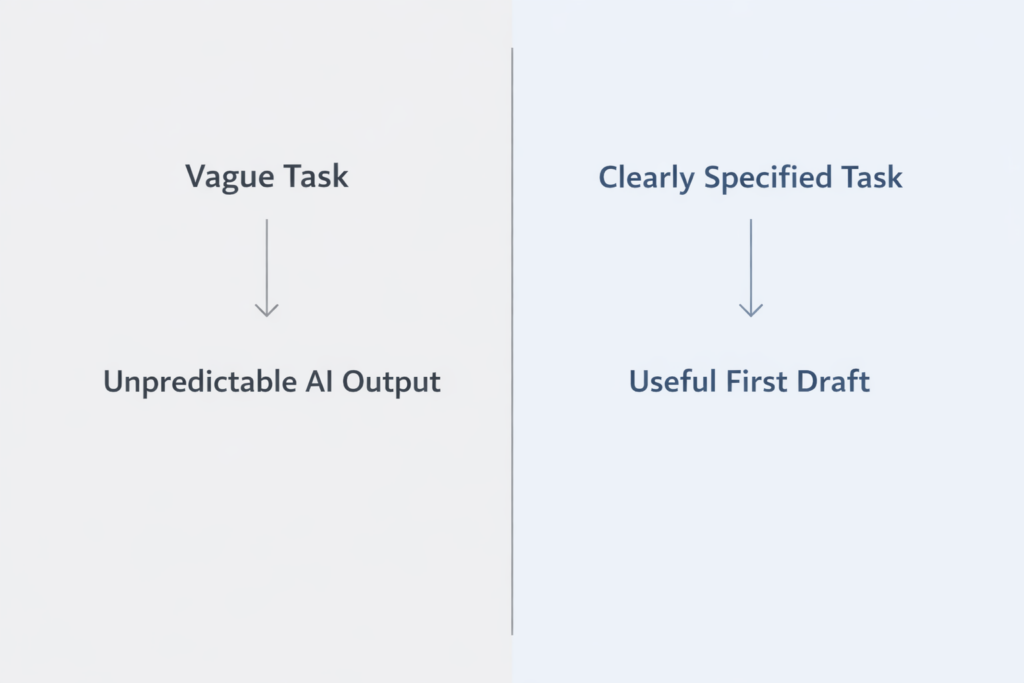
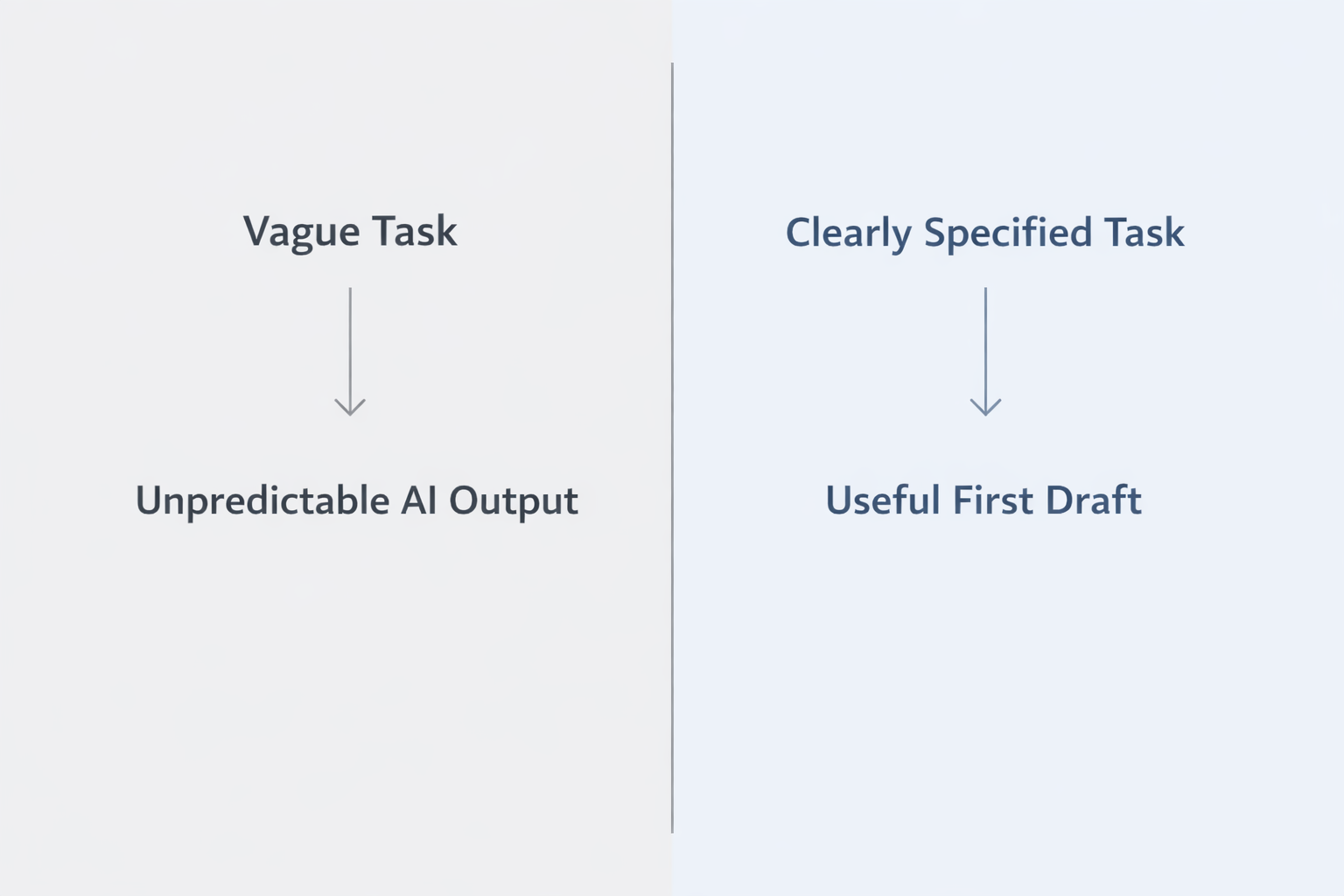
For more insights on AI implementation, see our guide on AI tools and learn about best practices from OpenAI’s documentation on prompt engineering.Diagram concept: Vague task → unpredictable AI output vs clearly specified task → useful first draft
Why This Is the Real Bottleneck in Using AI at Work
When people say “AI isn’t that useful at work,” they are usually describing an experience like this:
They ask AI to do something, receive an output that misses the mark, and conclude that the technology isn’t ready for serious use.
What’s happening instead is more subtle — and more human.
Most modern work relies on implicit knowledge: context, goals, constraints, and judgment that live in people’s heads. Humans share this implicitly. AI does not.
Why AI Workflow Automation Fails: The Real BottleneckWithout explicit specification, AI has no reliable way to know what matters.
Core mental model:
AI works best when you treat it like a junior collaborator, not a mind reader.

A junior collaborator can be extremely capable — but only if you explain what you’re trying to achieve, why it matters, and how you’ll judge success.
AI behaves the same way.
This is where many people get stuck. They keep trying different prompts, assuming the problem is how they’re asking — when the real issue is what they’ve actually defined.
What “Clear Work Specification” Actually Means
Clear specification is not about writing longer prompts or using clever wording.
It is about making implicit work explicit.
Every meaningful task contains assumptions. Humans infer them automatically. AI cannot.
When those assumptions remain unstated, AI fills the gaps arbitrarily. That unpredictability is often mistaken for lack of intelligence.
| Element | What You Must Make Explicit |
|---|---|
| Outcome | What “good” looks like when the task is complete |
| Context | Background the AI does not already have |
| Constraints | Audience, tone, length, format, rules |
| Evaluation | How you will judge whether the result worked |

This four-part structure is the minimum viable specification for delegating work to AI. You can use it for writing, analysis, planning, research, and decision support.
Why Better Prompts Alone Don’t Solve This
This is where many people go wrong.
They assume the problem is how they are asking, not what they are defining.
Prompt techniques can improve phrasing, but they cannot compensate for missing intent. If the task itself is underspecified, no amount of prompt tuning will consistently fix the result.
A Reusable Framework You Can Apply Immediately
- What decision or deliverable am I trying to produce?
- What information would a new teammate be missing?
- What constraints matter here?
- How will I know if the result is usable?
If this feels obvious, that’s a good sign. You’re already moving from conscious incompetence to conscious competence.
The Next Capability This Unlocks
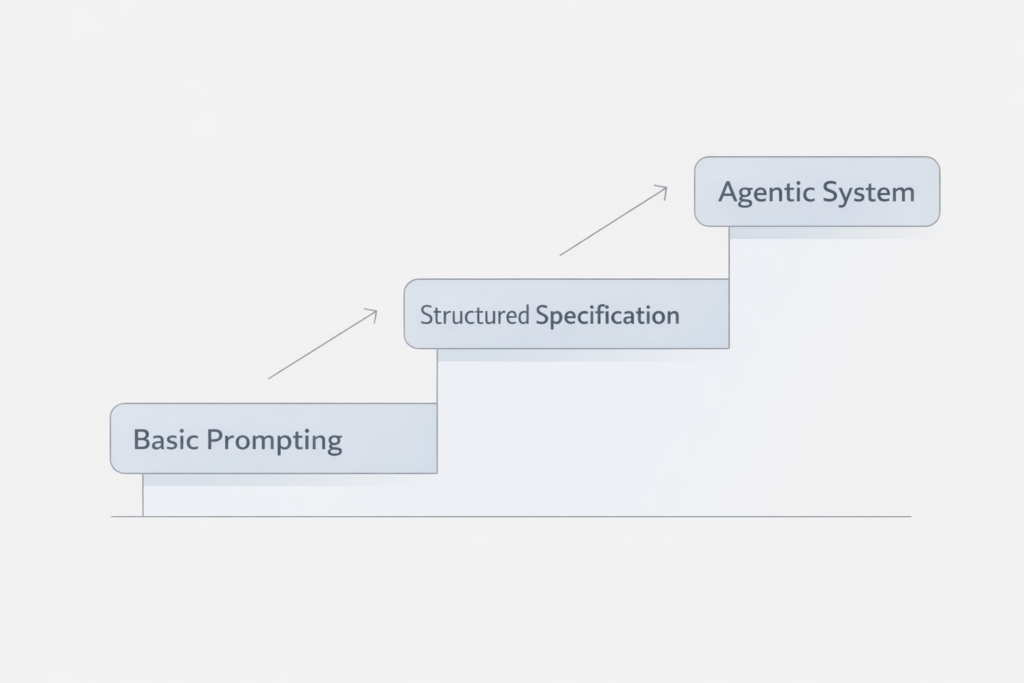
Next skill to build: breaking complex work into steps that can be evaluated independently.
Once you can specify single tasks clearly, the next bottleneck becomes structuring multi-step work so AI can assist without compounding errors.
Human Check: Did This Change How You Think?
If you now think of AI performance as a delegation problem rather than a prompting problem, this guide has done its job.
If parts still feel unclear, that’s expected. Most people need to revisit this mental model a few times before it becomes intuitive.
Related Canonical Guides
This guide is maintained as a canonical reference
Implementing effective AI workflow automation starts with mastering the fundamentals of work specification. Apply these principles consistently to transform AI from an unreliable tool into a dependable collaborator. and updated as AI systems and workplace practices evolve.