AI Workflow Automation for Small Businesses: A Practical, No-Hype System
Small Business Systems
In today’s fast-paced business environment, efficiency is crucial for small business success. By implementing AI workflow automation, small businesses can free up valuable time and resources, allowing them to focus on growth and customer satisfaction. This guide will explore actionable strategies for integrating AI workflow automation into everyday operations.
Consider how much time your team spends on these tasks each week. For instance, if team members are dedicating several hours to scheduling meetings, imagine the productivity boost they would experience if that was automated. This is where AI can significantly change the game.
Consider the tedious task of managing customer inquiries. Small businesses often receive a high volume of emails and messages. AI can automatically categorize these inquiries, directing them to the appropriate department or individual. This not only speeds up response times but also enhances the customer experience, demonstrating that their concerns are valued and promptly addressed.
For example, a small marketing agency might spend countless hours manually sorting through leads from various platforms. By implementing AI workflow automation, they can streamline this process, allowing their team to focus on strategic initiatives rather than menial tasks.
Learning about AI workflow automation can also lead to discovering new tools that integrate seamlessly with existing platforms. For example, a project management tool can automatically generate reports, saving your team from the hassle of manual data collection.
AI workflow automation helps small businesses reduce manual work by automating repetitive coordination tasks—without hiring developers or rebuilding their operations.
Small businesses that embrace AI workflow automation often report a significant reduction in operational costs. The automation of mundane tasks translates directly into a leaner workforce, where employees can invest their time in higher-value activities.
Moreover, by automating data entry tasks, businesses can eliminate human error and improve accuracy. Imagine a scenario where a customer fills out a form online; AI can automatically input this data into the company’s database without the need for manual entry. This process not only saves time but also ensures that important customer information is captured correctly.
For small businesses, the fear of implementing new technology often stems from a lack of understanding. Therefore, it is essential to provide training and resources that demystify AI tools and showcase their potential. Workshops, online tutorials, and real-world case studies can help small business owners feel more confident in adopting these technologies.
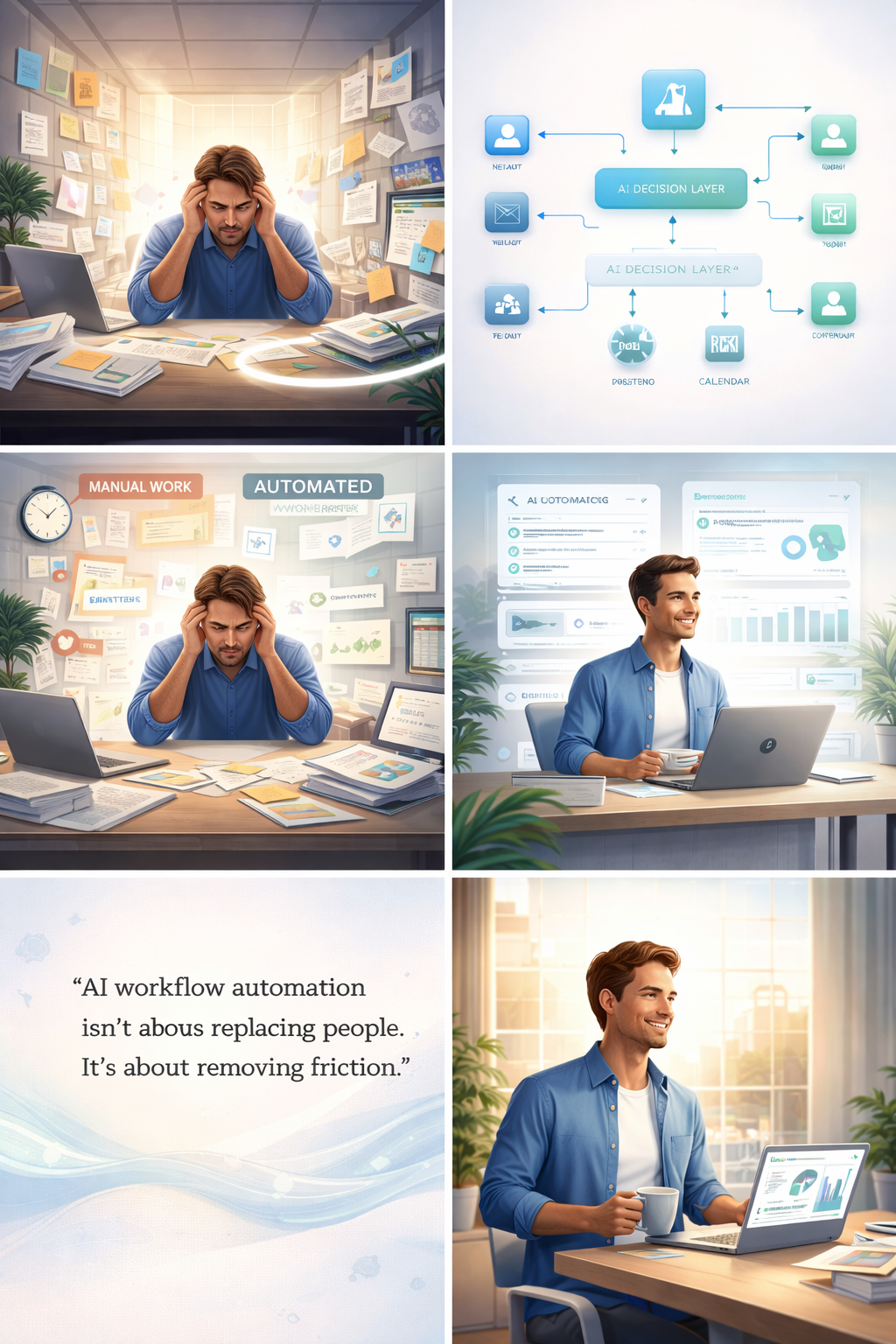
Consider a scenario where a lead enters the system. Without automation, a team member must manually input this data, create a task, and send a follow-up email. With AI workflow automation, all these steps can be executed automatically, ensuring a faster response time and a better customer experience.
One example of successful AI workflow automation is a small marketing agency that utilized AI tools to manage its campaign reports. By automating the generation of reports, the agency saved hours each week that were previously spent on manual data compilation. This not only increased their efficiency but also allowed them to focus on strategy and client engagement.
This leads to enhanced customer satisfaction because clients appreciate timely responses and seamless interactions. For instance, if an inquiry is responded to within minutes instead of days, it significantly boosts the likelihood of converting that lead into a paying customer.
Small businesses rarely struggle because of bad ideas. They struggle because too much time is consumed by repeatable work—emails, follow-ups, data entry, scheduling, and reporting.
Automation is especially useful in maintaining consistency across tasks. For example, by automating email responses, small businesses can ensure that every customer receives the same information and service quality, regardless of who is managing the inquiries.
AI workflow automation exists to solve this exact problem, especially when businesses understand how it differs from AI automation in general. This guide focuses on the system behind automation, not hype, tools, or trends.
AI Summary:
AI workflow automation helps small businesses reduce manual work by using artificial intelligence to route tasks, summarize information, and trigger actions across existing tools. The highest ROI comes from automating repetitive coordination—not replacing human judgment.
What AI Workflow Automation Really Means for Small Businesses
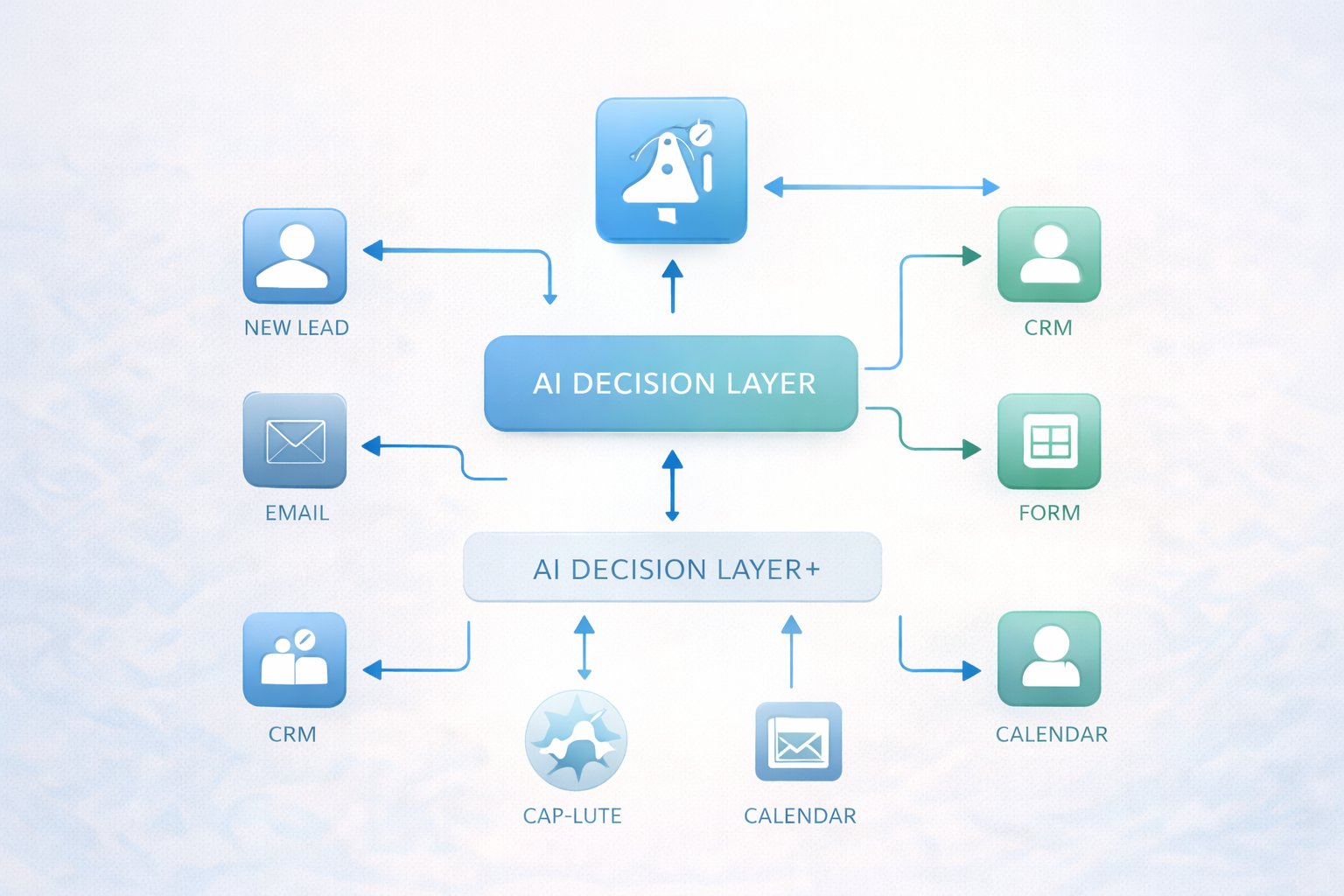
A workflow is any repeatable sequence: a lead arrives, information is logged, a task is created, and someone follows up. Automation connects these steps.
This not only improves efficiency but also strengthens the brand by delivering a uniform customer experience. Customers begin to recognize your business for its reliability and responsiveness.
AI workflow automation helps small businesses reduce manual work by automating repetitive coordination tasks. AI enhances workflows by classifying inputs, summarizing information, and triggering the correct action without constant human involvement.
The goal is not to replace people. The goal is to remove friction between steps that already exist.
The highest returns come from automating coordination, not decision-making. By identifying and automating repetitive tasks, small businesses can streamline their operations and create a more efficient workflow.
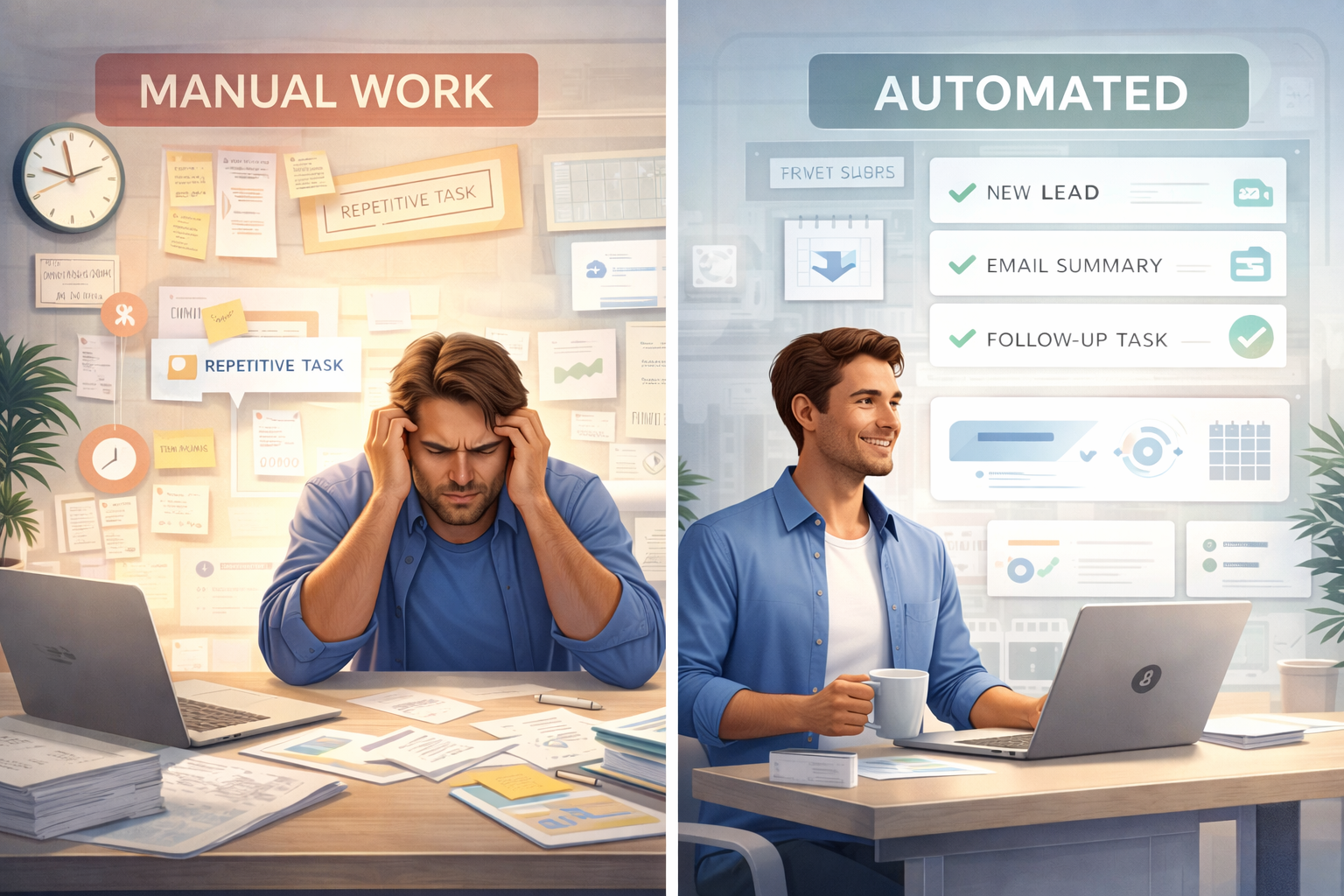
The best automation candidates share four traits: they are frequent, predictable, time-consuming, and low in creative judgment.
- Lead intake: automatically classify, route, and trigger follow-ups
- Email handling: summarize threads and tag intent
- Task creation: generate tasks from real business events
- Reporting: produce updates without manual data pulls
The highest returns come from automating coordination, not decision-making.
Small businesses often underutilize their existing tools. By integrating AI automation, they can maximize the potential of every application in their stack. For instance, a CRM can be linked with email marketing tools to create targeted campaigns based on customer behavior.
This creates a data-driven approach where decisions are made based on real-time information rather than assumptions, leading to better outcomes for the business.
The Core AI Automation Stack (No Developers Required)
Consider implementing AI-driven chatbots for customer service. These bots can handle common inquiries, provide instant responses, and escalate more complex issues to human agents when necessary. This hybrid approach ensures that customers receive immediate assistance while allowing staff to focus on more intricate tasks.
Most small businesses succeed with a simple three-layer setup built on no-code AI workflow tools rather than custom software.
- Workflow layer: defines triggers and connects tools
- Intelligence layer: classifies, summarizes, and interprets inputs
- Execution layer: CRM, email, tasks, and calendars
Fewer, well-connected tools outperform large, fragmented stacks.
How to Decide What to Automate First
As these processes become automated, small business owners can step back and focus on higher-level strategy and growth opportunities. This shift in focus can be transformative, as it allows for innovation and expansion that was previously constrained by manual workflows.
Before automating anything, it helps to clarify what to automate first by asking:
- Does this task happen weekly or more?
- Is the input predictable?
- Are the steps mostly consistent?
- Would mistakes here be costly or annoying?
To enhance your understanding of AI workflow automation, it’s essential to evaluate existing workflows critically. Identify bottlenecks and areas where delays occur frequently. This analysis will provide insights into which processes are ideal candidates for automation.
After initial automation, continuously monitor the performance of automated tasks. Use analytics to measure efficiency and gather feedback from team members. This iterative approach allows for adjustments and improvements over time, ensuring that the automation remains effective and aligned with business goals.
If at least three answers are yes, it is a strong automation candidate.
Common Questions About AI Workflow Automation
Is AI workflow automation expensive?
No. Most small businesses use no-code tools and existing software.
Do small businesses need developers?
No. Modern AI workflow automation tools are designed for non-technical users.
What is the biggest mistake to avoid?
Automating unclear processes before fixing the workflow itself.
Many small businesses may wonder about the scalability of AI workflow automation. As businesses grow, their automation systems can adapt accordingly. New tools can be integrated, and existing processes can be refined, allowing businesses to scale efficiently without losing momentum.
Another common concern is the reliability of AI systems. Regular updates and maintenance are crucial for ensuring that AI tools function correctly and securely. Entrust this responsibility to a dedicated team member or a third-party provider to maintain the integrity of your automated systems.
AI workflow automation isn’t about replacing people. It’s about removing friction.
To wrap up, embracing AI workflow automation not only saves time but also improves overall business agility. The ability to adapt quickly to changing market demands can be a significant competitive advantage for small businesses.
What AI Can’t (and Shouldn’t) Do
AI is excellent at consistency and pattern recognition. It is not good at ethical judgment, relationship nuance, or final decision-making.
AI workflow automation should not be used for final decisions, sensitive human interactions, or ethical responsibility. Humans remain accountable.
It’s important to foster a culture of adaptability within the team. Encourage employees to embrace technological changes by involving them in the automation journey. Their insights can lead to better implementations and higher acceptance rates for new systems.
The Long-Term Advantage of Automation Thinking

AI workflow automation is not a one-time project. It is a mindset: “Should this be manual?” and “Why does this require me?”
This guide explains AI workflow automation as a system—not a tool list, so small businesses can apply it regardless of platform.
Final takeaway: Start with one workflow that gives time back. That reclaimed time fuels sustainable growth. Remember, the journey of automation is ongoing, and every small step can lead to significant change.
In conclusion, AI workflow automation is about more than just technology; it’s about transforming how small businesses operate. By adopting this mindset and focusing on continuous improvement, businesses can harness the full potential of AI to drive growth and efficiency.